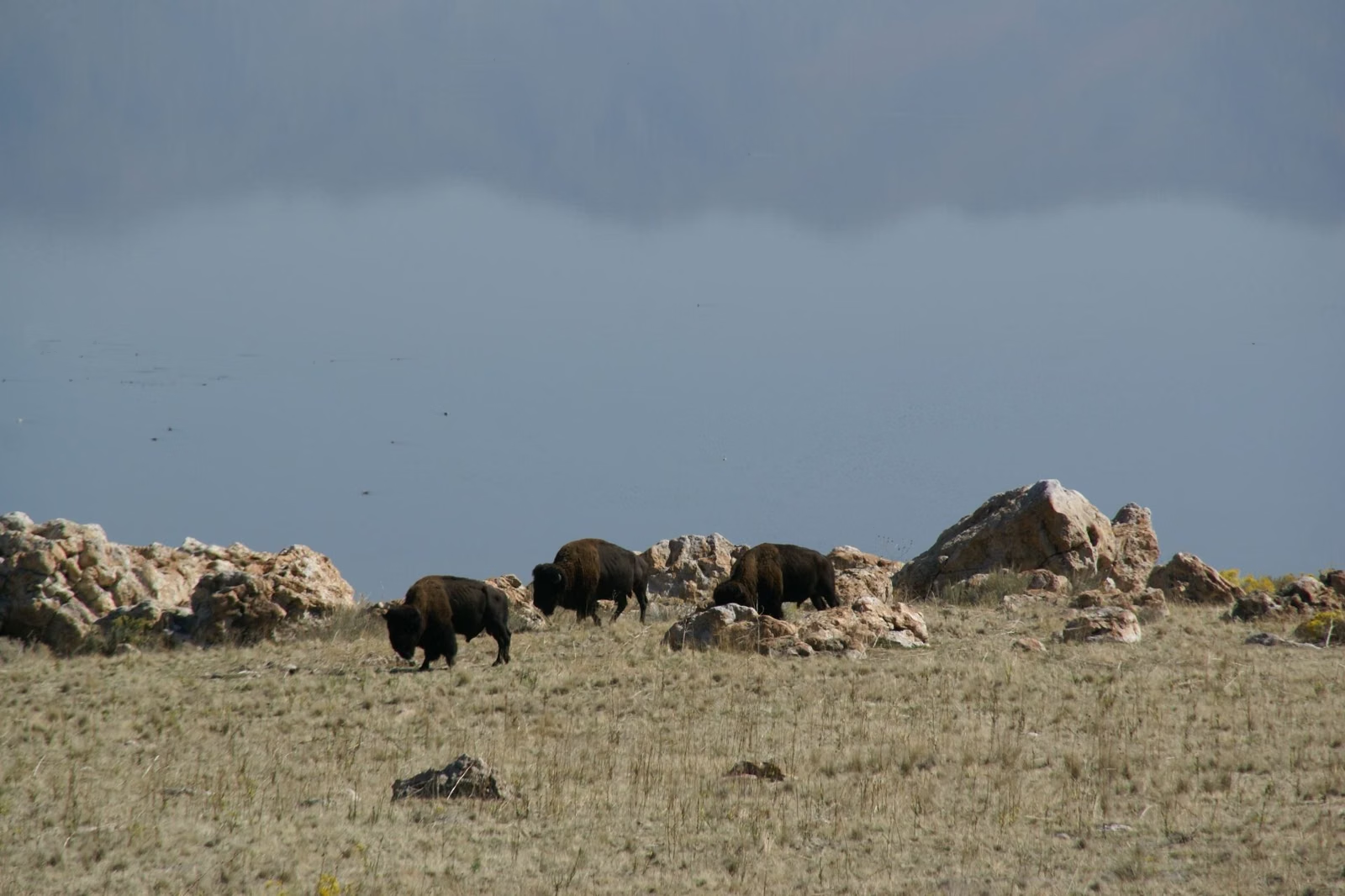
Bison Roundup
The 2026 Antelope Island Bison Roundup is Saturday, October 24. Hundreds of horseback riders leave the Fielding Garr Ranch at 9 a.m. and push nearly 800 bison north into the corrals, usually finishing between noon and 3 p.m. Watching is free with normal park entry and needs no registration; the best place to see the final push is the viewing area at White Rock Bay. The herd is then worked October 27 to 29, with free public tours, and the extra bison are sold at an online auction on November 3, 2026.
2026 Roundup Dates
What Happens at the Roundup
Utah State Parks runs the roundup every fall to keep one of the nation's largest and oldest public bison herds healthy and within what the island can feed. It has two phases.
Phase 1: The Push (October 24, 2026)
Riders gather the herd's smaller groups into one large herd and drive it north to the holding corrals, where the bison rest for a couple of days to lower their stress before handling. For safety, vehicle access along the east side road is limited that day.
Phase 2: Working the Bison (October 27 to 29, 2026)
Each animal is sorted and checked one at a time: vaccinations, a health screening (pregnancy, parasites and other issues), and a small RFID tag that links it to its health records. Each bison is then released back onto the island or kept for the auction. Free public tours run all three days; educators and group organizers should reserve a group tour by email through the park.
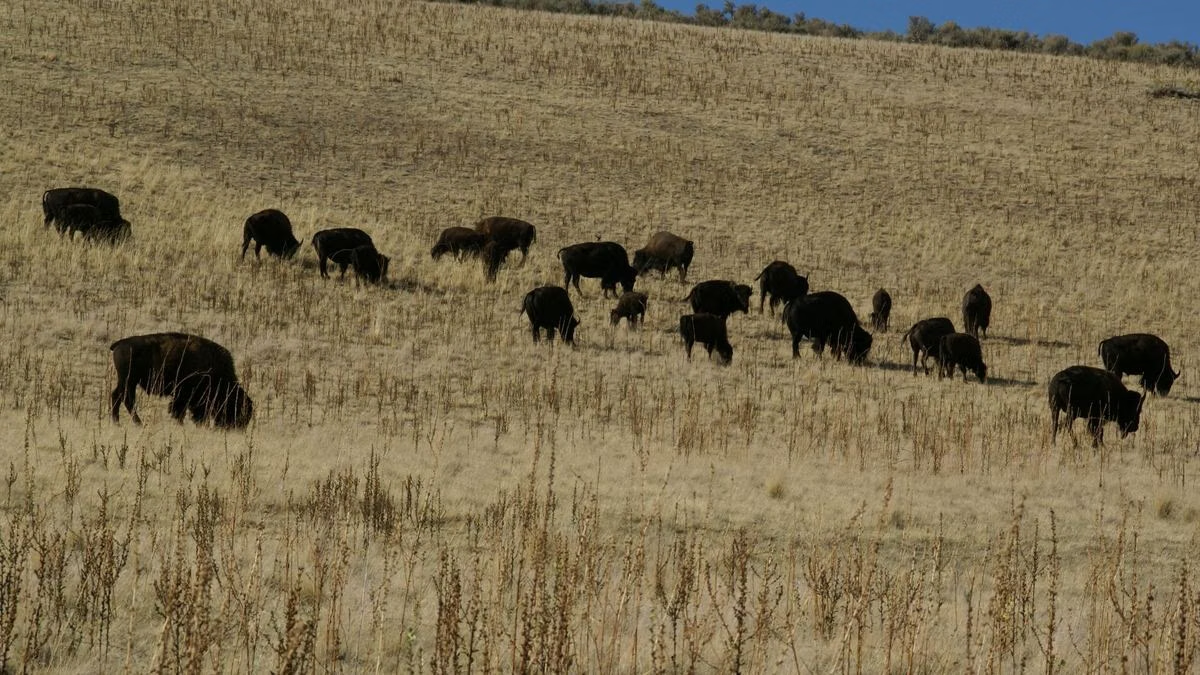
How to Watch the Push
- No registration is needed to watch. Pay the normal entrance fee and drive in.
- Go to White Rock Bay. Utah State Parks sets up its Roundup Rendezvous viewing area there for the final push into the corrals, with food for sale, vendor booths, educational activities and games. It opens at 10 a.m. and runs until the last bison reaches the corrals.
- Bring a camp chair or blanket. Seating is your own.
- Be patient. The push usually wraps up between noon and 3 p.m., but the park reminds visitors these are wild animals and timing can't be predicted.
- Arrive early. Utah State Parks calls the push a popular event every year, drawing local spectators and visitors from around the world.
The Bison Auction
The island can support about 500 to 550 bison, and 100 to 200 calves are born each year. With no natural predators able to take down a bison, the park sells the excess at a public auction, held online on November 3, 2026 and streamed in the Visitor Center's theater. Part of the money goes to the park's wildlife and habitat management program. In 2025, 257 bison sold for a total of $626,950.
Riding in the Roundup
Public riders can join the range ride with their own horse. Registration opened September 1, costs $100 per person (covering the ride, up to four nights' camping at the ranch, a bandana and a Saturday chili dinner hosted by Antelope Island Friends), and closed when full or on October 16, 2026. Riders must be 18 or older, attend an 8:30 a.m. orientation at the Fielding Garr Ranch, bring weed-free hay, and keep dogs off the trail. No alcohol before or during the ride, by order of the Davis County Sheriff.
Plan Around It
Because of the roundup, Utah State Parks starts no special use permits (weddings, races, commercial shoots) between September 15 and November 15. The rest of the park stays open on its normal hours.
Bison Roundup FAQ
When is the Antelope Island Bison Roundup in 2026?
The roundup push is Saturday, October 24, 2026. The bison are worked October 27 to 29, and the online auction is November 3, 2026.
Can the public watch the bison roundup?
Yes, free with park entry and no registration. The best spot is the viewing area at White Rock Bay, open from 10 a.m. until the last bison reaches the corrals.
What time does the bison roundup start?
Riders leave the Fielding Garr Ranch at 9 a.m. The push typically finishes between noon and 3 p.m.
Can I ride in the Antelope Island bison roundup?
Yes, with your own horse, if you're 18 or older and registered. Registration costs $100 and opens September 1; the 2026 deadline was October 16.
Why are bison sold at auction?
The island supports about 500 to 550 bison and 100 to 200 calves are born each year. With no natural predators, the park sells the extras to keep the herd within what the habitat can feed.